

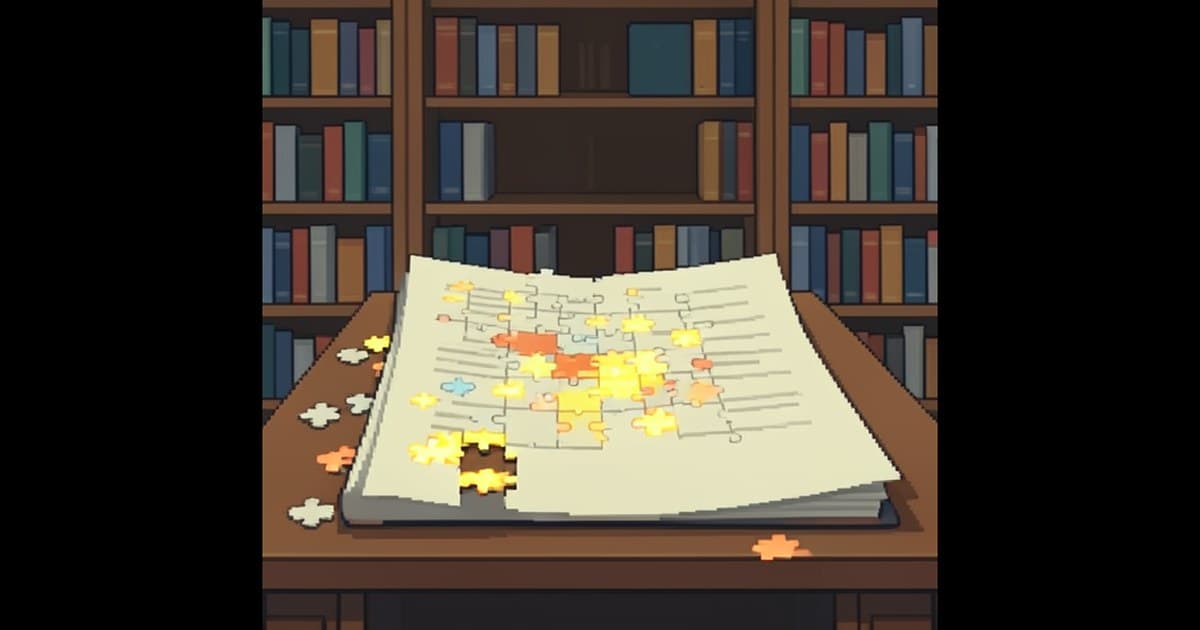
Every failed RAG answer I have debugged in production had the same root cause: the retriever never saw the answer. The exception clause was in the document, the embedding model was fine, the LLM was capable — but the chunk containing the key sentence had been split at exactly the wrong boundary, so its vector matched nothing.
In this deep-dive I show you how to cut documents so retrieval stops failing: fixed vs recursive vs semantic vs late chunking, what chunk size and overlap the 2026 benchmarks actually support, and a Python tutorial you can run on your own corpus this afternoon.
1. The Problem: Good Documents, Broken Chunks
Chunking decides retrieval quality before your embedding model ever sees the text. If a chunk holds two unrelated topics, its vector lands halfway between them and matches neither query well. If it contains “the limit” with no antecedent, the embedder cannot disambiguate which limit. And if a table is sliced across rows, the fragments are useless at generation time. Weaviate’s September 2025 guide puts a number on it: up to 9% recall gap between the best and worst chunking approaches on the same corpus with the same retriever.
The Most Common Mistake
Tuning the embedding model before fixing the chunks. Teams swap embedders, add rerankers, and enlarge the LLM while leaving chunking at the library default — then wonder why retrieval stays mediocre. Vectara’s peer-reviewed NAACL 2025 study adds a warning in the other direction: on realistic document sets, fixed-size chunking consistently outperformed semantic chunking, so “smarter sounds better” is not a strategy either. Measure on your corpus, then decide.
This guide gives you a defensible path: start with recursive 512-token splits, match size to your query type, and graduate to semantic, late, or contextual chunking only when your own retrieval metrics justify the added cost. Every number below comes from a published benchmark linked in Sources — treat vendor numbers as directional and your own RAGAS scores as the tie-breaker.
2. Minimal Concepts: Six Strategies in Five Minutes
There are really only six moves in 2026, and each attacks a different failure: coherence (one topic per chunk), self-containment (no dangling references), and recall granularity (small enough that the answer dominates the chunk’s vector). Here is the full menu before we measure anything.
Fixed-Size
256–512 tokens · Fastest
Cut every N characters regardless of content. Zero overhead and predictable sizes, but it slices mid-sentence and mid-table. Prototyping only — never the production default.
Recursive
LangChain default · 256–1024 tokens
Tries separators in order — paragraphs, lines, sentences, words — before a hard cut. Most splits land on natural boundaries. The safest default: recursive 512-token splits won a February 2026 seven-strategy benchmark.
Semantic
Embedding boundaries · Variable size
Splits where embedding similarity between sentences drops. Highest retrieval recall in Chroma’s eval (91.9%) but lower end-to-end accuracy than recursive in FloTorch’s test (54% vs 69%) — tiny fragments retrieve well and answer badly. Roughly 14× slower than token splitting per Chonkie benchmarks.
Late Chunking
Jina AI, 2024 · Whole-doc first
Embeds the entire document with a long-context model first, then mean-pools token vectors into chunk vectors — every chunk inherits cross-document context for free. Fixes “the limit” coreference pain. Needs a model that exposes token vectors (jina-embeddings-v3, nomic-embed-text, BGE-M3).
Contextual Retrieval
Anthropic, Sep 2024 · 50–100 token preamble
An LLM writes a short context situating each chunk in its document, prepended before embedding and BM25. Cut top-20 retrieval failures 35% alone, 49% with contextual BM25, 67% with reranking (5.7% → 1.9%) on Anthropic’s evals.
Parent–Child
Small-to-big · 256 / 1024 tokens
Search against small child chunks for precision, hand the parent chunk to the LLM for context. The team that replaced slow Graph RAG in production used 1024-token parents with 256-token children and lifted factual F1 from 0.61 to 0.84 on legal contracts.
My Recommended Default
RecursiveCharacterTextSplitter at 512 tokens with 50–100 tokens of overlap, counted with a real tokenizer. It is the configuration that keeps winning general benchmarks, costs 1× at indexing, and takes three lines of code. Everything below is about knowing exactly when to leave it.
3. Chunk Size and Overlap: What the Numbers Say
Chunk size is the highest-leverage hyperparameter in the pipeline — NVIDIA’s research found getting it wrong by one bracket degrades context precision by 15–30%. Overlap, meanwhile, lost its “always add it” status: a January 2026 systematic analysis found no measurable benefit for sparse retrieval, only higher indexing cost. Treat both as tunables with the ranges below.
📏 Chunk Size by Query Type
256–512 tokens
Factoid QA — the answer is a phrase in the source. Small chunks concentrate the answer in the vector. NVIDIA benchmark bracket.
512–1,024 tokens
Analytical and multi-hop queries — the LLM needs surrounding context to reason. NVIDIA benchmark bracket.
200–400 tokens
QA over technical docs — the sweet spot for text-embedding-3-large and Cohere embed-english-v3.0 in vendor benchmarks.
800–1,200 tokens
Summarization and comparative reasoning — larger windows win because the answer needs the passage around it.
50–200 tokens
Code search — split at function or class boundaries, never by token count, with file path prepended for disambiguation.
No chunking
Short self-contained docs (FAQs, product blurbs) — Firecrawl’s 2026 tests show chunking hurts here. One doc, one chunk.
🔗 Overlap Rules
10–20% default
50–100 tokens on a 512-token chunk. Recovers answers straddling a boundary without drowning the index in near-duplicates.
25% when recall lags
128 tokens on a 512-token chunk per Microsoft Azure’s guidance. Raise overlap only after measuring a boundary problem.
0% with semantic cuts
When splits already land on topic shifts, overlap adds no measurable recall. Zero is a valid, cheaper setting.
📚 Where These Numbers Come From
Weaviate, Sep 2025
9% recall gap best vs worst
Anthropic, Sep 2024
35% / 49% / 67% failure cuts
NVIDIA benchmark
Size brackets per query type
LlamaIndex study
1024 tokens near peak faithfulness
Chonkie benches
Semantic ~14× slower to index
arXiv, Jan 2026
Overlap no benefit for SPLADE
Tip: Count Tokens, Not Characters
Pass a real tokenizer as length_function instead of len — character and token counts diverge hard on code, URLs, and non-ASCII text. With tiktoken’s cl100k_base your 512-token budget means the same thing to the splitter and to the embedding model.
4. Tutorial: From Raw Docs to Measured Chunks
Theory ends here. The workflow below runs on your corpus in one afternoon: build a 50-question golden set from real query logs, sweep recursive sizes, compare against semantic, and keep whichever wins on your metrics — not on a vendor chart. If you use LlamaIndex instead of LangChain, the equivalent entry point is SentenceSplitter from llama_index.core.node_parser with the same chunk_size and chunk_overlap arguments.
🛠️ The Five Steps
Step 1 — Golden set
Collect 50 representative questions with known answer spans (character offsets in the source doc). Store spans, not chunk indices — indices shift when you re-chunk.
Step 2 — Recursive sweep
Run 256, 512, and 1024 tokens with 10–20% overlap through the harness in code block 1. Rank by recall@10 and top-20 failure rate.
Step 3 — Semantic challenger
Run code block 2 on the same golden set. Watch average chunk size — if fragments average under ~100 tokens, expect the FloTorch paradox: great recall, weak answers.
Step 4 — Route by type
Markdown goes through header-aware splitting first, code through language-aware splitting, tables row-wise, prose through the winner of steps 2–3.
Step 5 — Lock and monitor
Freeze the winner, wire recall@k into CI, and re-run the sweep whenever the corpus mix changes. Chunking drifts silently as documents change.
📊 What to Measure
recall@k + failure rate
Track recall@10 and 1-minus-recall@20. Report both recall@1 and recall@10 — recall@10 hides catastrophic top-1 misses.
End-to-end accuracy
A chunk that retrieves well but answers badly is still a bad chunk. Score final answers, not just retrieval.
Chunk shape stats
Chunks count, average/min/max size. Tiny fragments and mega-chunks are the two signatures of a broken config.
Cost and latency
Indexing bill per million chunks and p95 query latency. Semantic costs 2–5× at ingest; reranking costs latency per query.
Code 1 — Recursive size sweep (LangChain)
from langchain_text_splitters import RecursiveCharacterTextSplitter

with open("docs/manual.txt", encoding="utf-8") as f:
    text = f.read()

for chunk_size, chunk_overlap in [(256, 25), (512, 50), (1024, 100)]:
    splitter = RecursiveCharacterTextSplitter(
        chunk_size=chunk_size,
        chunk_overlap=chunk_overlap,
        length_function=len,
    )
    chunks = splitter.split_text(text)
    sizes = [len(c.split()) for c in chunks]
    avg = sum(sizes) / len(sizes)
    print(f"{chunk_size}/{chunk_overlap} -> {len(chunks)} chunks, avg {avg:.0f} words")
Code 2 — Semantic challenger (langchain-text-splitters)
from langchain_text_splitters import SemanticChunker  # core since PR #35668; langchain_experimental path is legacy
from langchain_openai.embeddings import OpenAIEmbeddings

splitter = SemanticChunker(
    OpenAIEmbeddings(model="text-embedding-3-small"),
    breakpoint_threshold_type="percentile",
    breakpoint_threshold_amount=95,
)
docs = splitter.create_documents([text])
print(f"Semantic chunking produced {len(docs)} chunks")
for i, doc in enumerate(docs[:3]):
    print(f"--- chunk {i} ({len(doc.page_content)} chars) ---")
5. Contextual Retrieval and Late Chunking in Practice
When the sweep plateaus, these two techniques attack the remaining failures from opposite sides. Contextual retrieval brute-forces self-containment with a 50–100 token LLM preamble per chunk; late chunking gets in-document context for free by embedding the whole document before pooling into chunks. They compose well — late-chunk first, then prepend context — and neither adds query-time latency because all the work happens at ingest.
Contextual preamble
One LLM call per chunk over the cached full document. The 50–100 token context rides in front of the untouched chunk text as extra retrieval surface. Alone it cut Anthropic’s top-20 failures by 35%.
Contextual BM25
Run BM25 over the same contextualized text, not the raw chunks — that single detail moves the ablation from 35% to 49%. Dense catches meaning, lexical catches error codes and identifiers.
Rerank top-150 to 20
A cross-encoder re-scores fused candidates per query. This is what pushes the stack to the full 67% reduction — at the price of per-query latency, so budget it explicitly.
Late chunking
Embed once with jina-embeddings-v3 (or nomic-embed-text, BGE-M3), then mean-pool token vectors into chunk vectors. OpenAI’s API exposes no token vectors, so this path is closed if you are pinned to it.
Prompt caching
Cache the document once and reuse it for every chunk-context call — roughly $1 per million chunks with a Haiku-class model. Without caching the same ingest costs 10–30× more.
Code 3 — Same idea in LlamaIndex
from llama_index.core import Document
from llama_index.core.node_parser import SentenceSplitter

splitter = SentenceSplitter(chunk_size=512, chunk_overlap=50)
nodes = splitter.get_nodes_from_documents([Document(text=text)])
chunks = [n.text for n in nodes]
print(f"SentenceSplitter produced {len(chunks)} chunks")
Code 4 — Contextual preamble pattern (Anthropic recipe)
CONTEXT_PROMPT = (
    "<document>{doc}</document>
"
    "Here is the chunk to situate within the whole document.
"
    "<chunk>{chunk}</chunk>
"
    "Reply with a 50-100 token context for this chunk."
)

# Prepend before BOTH embedding and BM25 indexing
contextualized = context + "

" + chunk
6. Decision Path: Which Strategy for Your Docs
There is no universal winner — FloTorch’s recursive victory, Chroma’s semantic recall crown, and NVIDIA’s page-level win all came from different corpora. Walk the path below in order and stop at the first step whose evidence matches your documents.
☀️ Start Here (One Afternoon)
- 1. Recursive splitting at 512 tokens with 10–20% overlap, token-counted. This is the configuration behind the 69% end-to-end accuracy high-water mark on academic papers.
- 2. Score it on 50 golden queries from your own logs before touching anything else.
- 3. If short docs dominate your corpus, also test no-chunking — one FAQ, one chunk.
📅 Branch by Document Type
- Paginated PDFs: Try page-level chunking — it won NVIDIA’s 2024 benchmarks on financial documents.
- Markdown / HTML: Split on headers first, then recursive within sections. Headings already encode topic structure better than embeddings can infer it.
- Code + tables: Language-aware splitting at function boundaries, row-wise for tables. Never let a fixed window cut a function or a row in half.
📆 Graduate Only on Evidence
- Semantic: When narrative prose defeats recursive and fragments stay above ~200 tokens. Budget 2–5× ingest cost.
- Late chunking: When dense cross-references (“the limit”, “that policy”) defeat everything else and docs fit the embedder’s context window.
- Contextual + rerank: When chunks are context-poor alone — contracts, manuals, dense reports — and the 35 → 49 → 67% ladder reproduces on your evals.
7. Common Mistakes That Kill Retrieval
Across every 2026 benchmark post-mortem I read, the same five failures kept appearing. They are all cheap to avoid once you have seen them named — and expensive to debug as “the embeddings must be bad”.
✅ Do
- • Evaluate chunking changes with recall@k plus end-to-end answer accuracy
- • Store golden answer spans as character offsets, not chunk indices
- • Match chunk size to query type: small for facts, large for analysis
- • Re-run the sweep when the corpus mix changes — chunking drifts
- • Apply BM25 and reranking on contextualized text, not raw chunks
- • Treat the ~2,500-token context cliff as a ceiling for single chunks
❌ Do Not
- • Default to semantic chunking because it sounds more principled
- • Assume overlap always helps — test zero overlap on semantic cuts
- • Re-chunk at query time — chunk once at ingestion
- • Expect MTEB embedding scores to predict your domain’s retrieval
- • Ship page-level chunking on documents with no real page structure
- • Read vendor headline numbers as promises for your corpus
Golden rule
Cut deliberately, measure relentlessly. Chunking is the cheapest lever in RAG and the most overlooked — a 9% recall swing costs you nothing but an afternoon of sweeps, while a bigger model bills you forever.
Conclusion
The 2026 evidence points one way: begin with recursive 512-token splits counted by a real tokenizer, size chunks to your query type, and add semantic, late, or contextual machinery only when your own golden set says the added cost buys accuracy. Contextual retrieval’s 35 → 49 → 67% ladder and late chunking’s free coreference resolution are real tools, not magic — reproduce them on your data.
Run your first sweep this week: 50 questions, three sizes, one afternoon. The teams that measure chunking stop firefighting retrieval in production — and everything downstream, from reranking to generation, gets better for free.
Production Recipe: Summary
Chunking
- • Recursive 512 + 10–20% overlap
- • Size by query type
- • Route Markdown / code / tables
Enrichment
- • 50–100 token context preamble
- • Contextual BM25 + rerank
- • Late chunk for cross-references
Measurement
- • 50 golden queries, span-based
- • recall@k + end-to-end accuracy
- • Re-sweep on corpus drift
Sources
- Anthropic — Contextual Retrieval (Sep 2024): 35% / 49% / 67% failure-rate cuts
- PremAI — RAG Chunking Strategies: The 2026 Benchmark Guide
- Firecrawl — Best Chunking Strategies for RAG in 2026
- LangChain docs — Recursive text splitter integration guide
- Digital Applied — RAG Chunking Strategies: A 2026 Retrieval Playbook
- Jina AI — Late Chunking paper (arXiv:2409.04701)